

Driving aids · One hand on the wheel
Steer — and keep your life moving.
When two-handed steering or foot pedals are no longer realistic, most people assume driving is over. It is not. Steering knobs, grips and hand controls exist so you can keep going to work, picking up family, and living the week you already know — with the right aid, not more struggle.
What Maya Mobility teaches first
You feel the limitation every day. The solution has a name — you may never have heard it.
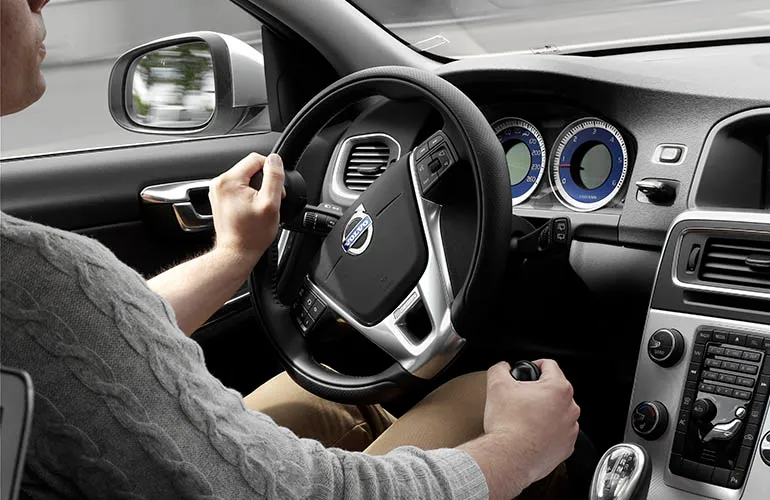
Reduced grip, one usable arm, or the inability to work pedals safely does not mean “stop driving.” It means the car needs a different interface. Steering devices (also called steering knobs, wheel spinners or steering aids) make one-handed steering precise. Hand controls move accelerator and brake to your hands. Together they rebuild independence that pedals alone took away.
Our job is not to overwhelm you with products. It is to help you recognise which aid matches how you can still use your body — so life stays normal, not smaller.
How a steering device works
Grip once. Turn freely. Change when you want.
A steering device has two parts: the knob or grip, and a clamp on the steering wheel joined by a quick-release pin. A bearing in the clamp lets the knob rotate freely — you do not need to reposition your hand even through multiple revolutions. Swap grips later if your needs or preference change.
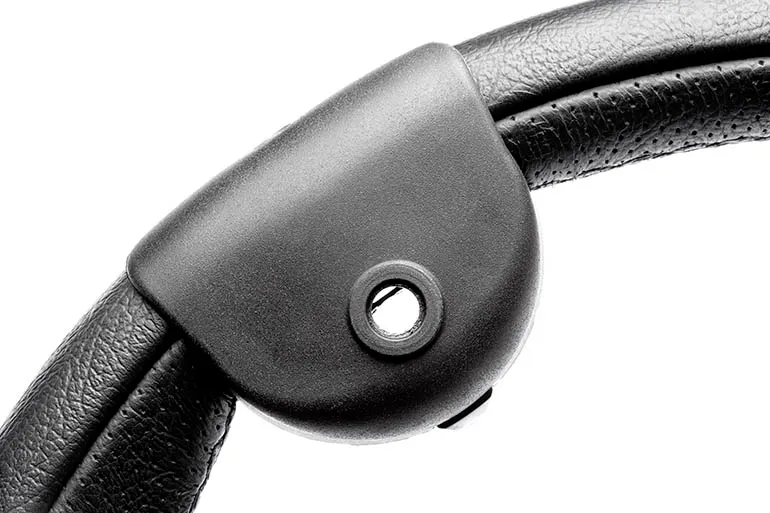
When turning still feels heavy
Lightened power steering.
Fitting a steering device for limited mobility often goes with lightened power steering — an adaptation to the vehicle’s power steering that reduces the force needed to turn the wheel. Knob plus lighter steering is how many drivers get back to calm, controlled driving.
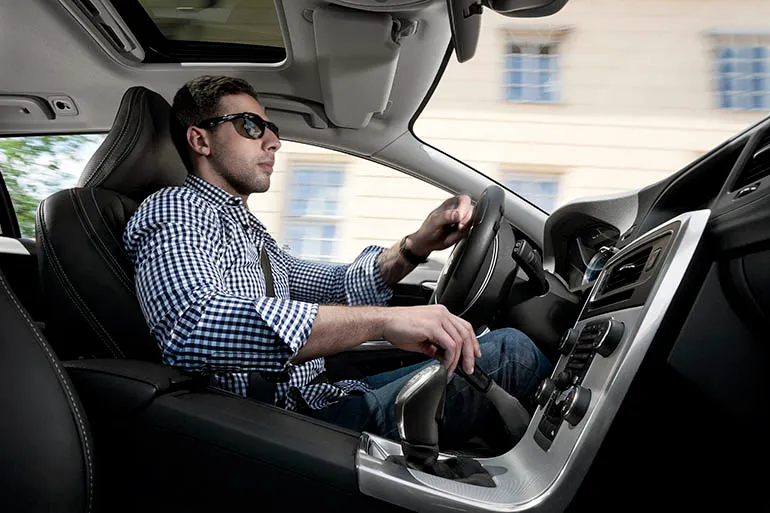
Knobs & grips
Find the shape your hand can trust.
Comfort and safety start with the right grip. These devices fit most standard steering wheels — and they pair naturally with hand controls, because one hand stays on the wheel while the other works brake and gas.
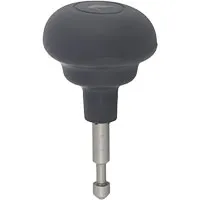 Ergo
Most popular. Flat oval grip, low profile — fingers stay near indicators and cruise.
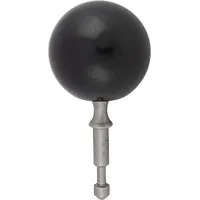 Round
Spherical. Small ~40 mm or large ~50 mm — pick what fills your palm.
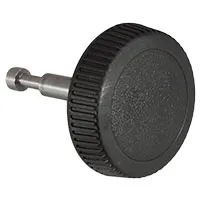 Low
Palm closest to the wheel — signals and wipers stay within finger reach.
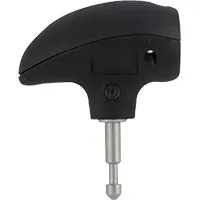 Standard
Same handle family as Carospeed Menox — larger knob feel without pin grips.
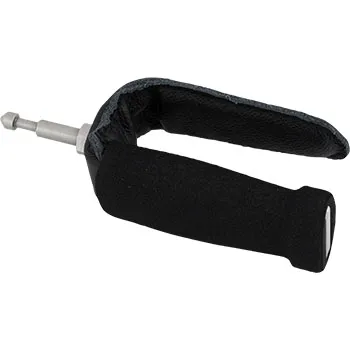 2-pin (tetra)
Hold like a handle; hand rests in a cradle — strong option for reduced grip.
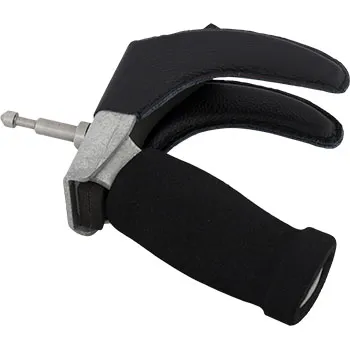 3-pin (para)
Same cradle idea with three pins — reshape to fit the hand.
Steering is only half the story. If your feet cannot work the pedals, your hands can — that is what hand controls are for.
Hand controls — the missing half
Accelerator and brake without the pedals.
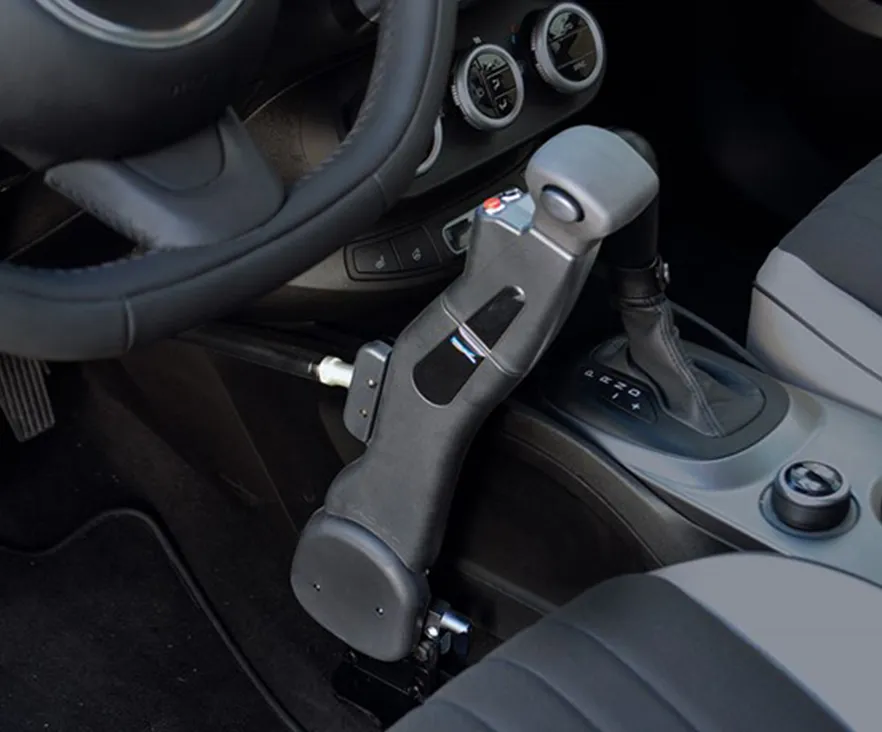
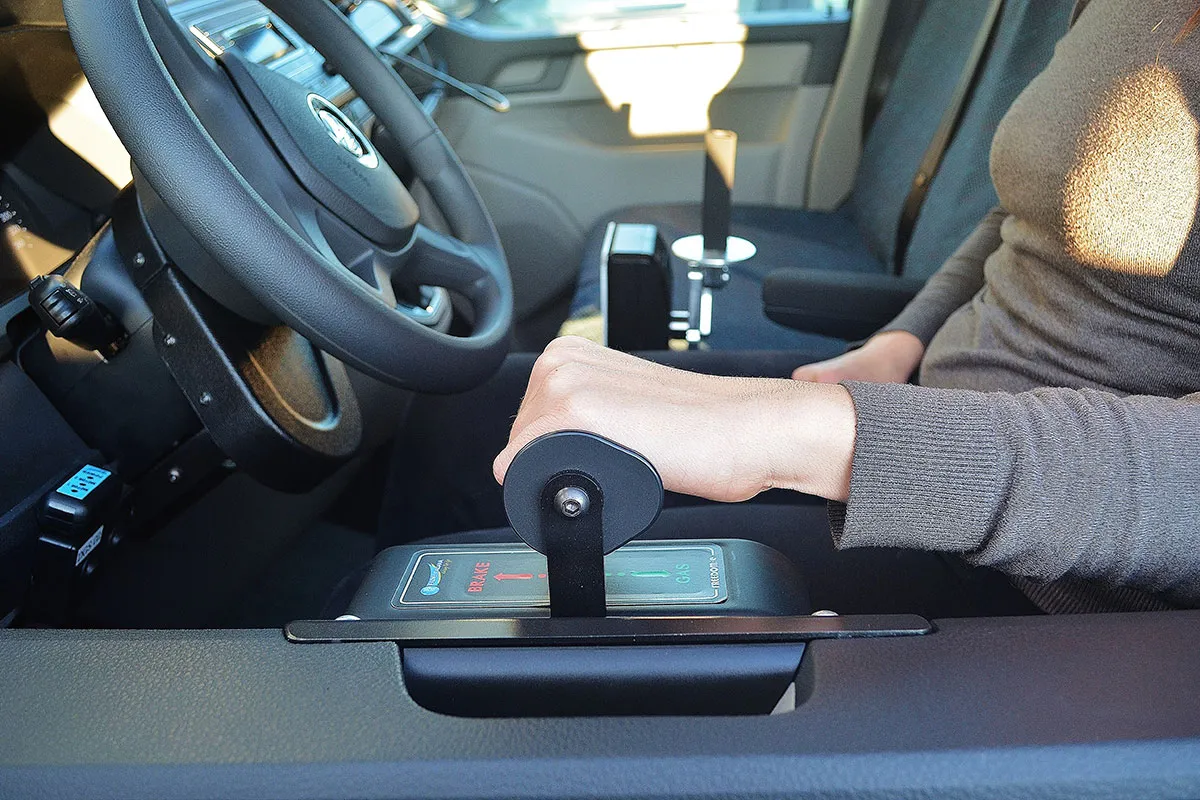
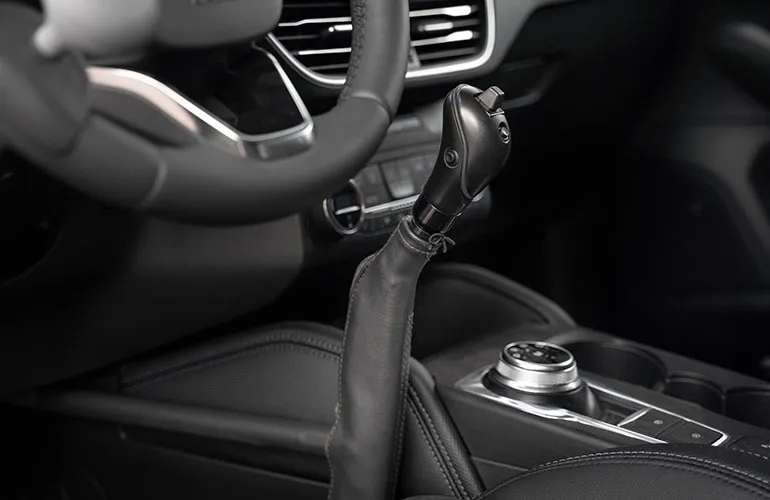
Hand controls let you operate the car with your hands: brake, accelerator and related functions. Types include lever, push/rock, push/pull and electronic systems — left- or right-hand layouts depending on which side still works for you. Many drivers combine them with a steering knob because one hand stays on the wheel while the other manages speed.
Which path might fit
Match the aid to what you can still do.
A steering knob or grip restores precise one-handed steering — often with lightened power steering.
2-pin or 3-pin cradles let the hand rest in the device instead of squeezing a ball.
Hand controls (lever, push/pull, push/rock or electronic) move brake and gas to your hands.
Hand controls can be set for the side you can use — not a one-size-fits-all lever.
Original pedals stay. Family can drive with their feet; you drive with your aids.
That is normal. Maya Mobility exists to name the option before life quietly shrinks around the driveway.
FAQ
Questions people ask once they know aids exist.
Not sure which grip or control is yours?
Tell us which hand and foot function you still have, and what car you drive. A Maya Mobility specialist will help you see whether a steering device, hand controls — or both — keep your life on the road.
Also explore