Fleet securement · Maya One

Maya One

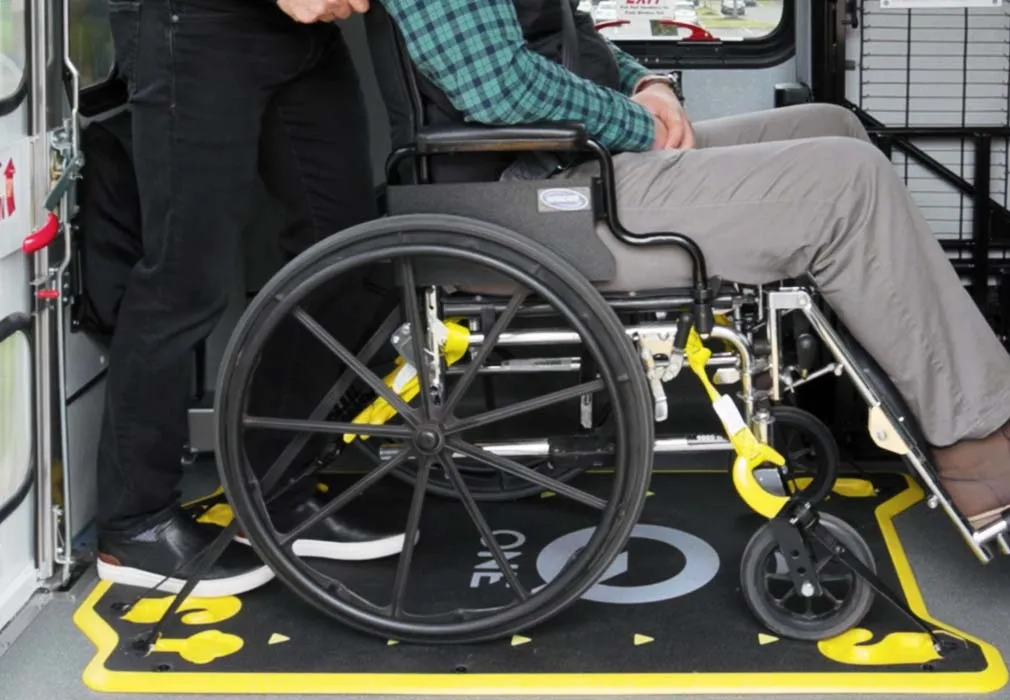
One platform. One process. The all-in-one securement station for operators who are done guessing which retractor goes where — and passengers who deserve a ride that starts calm, not chaotic.

What most people never realise

Loose straps on the floor are not a “system” — they are a training debt.

Traditional 4-point securement can work. In practice, every vehicle ends up with a slightly different layout, drivers invent shortcuts under time pressure, and the three biggest risks stay the same: fittings not locked into the floor, belt angles wrong for modern power chairs, and the occupant belt skipped because it feels awkward.

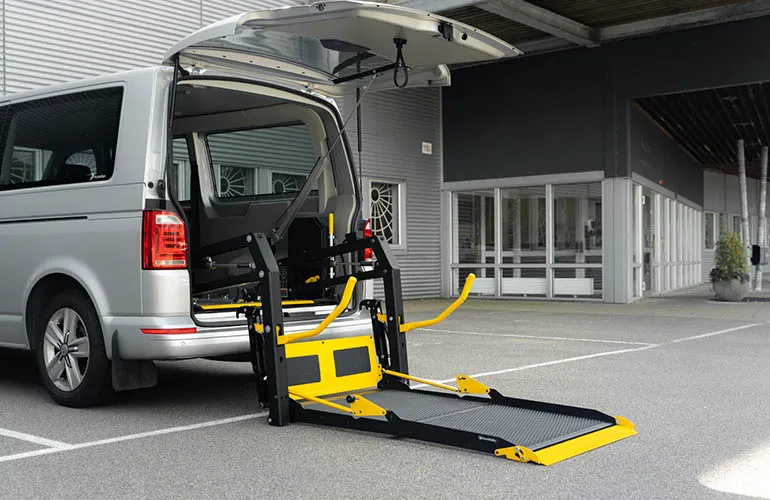
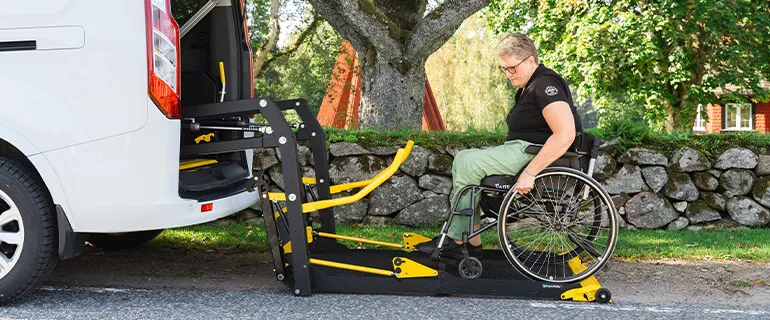
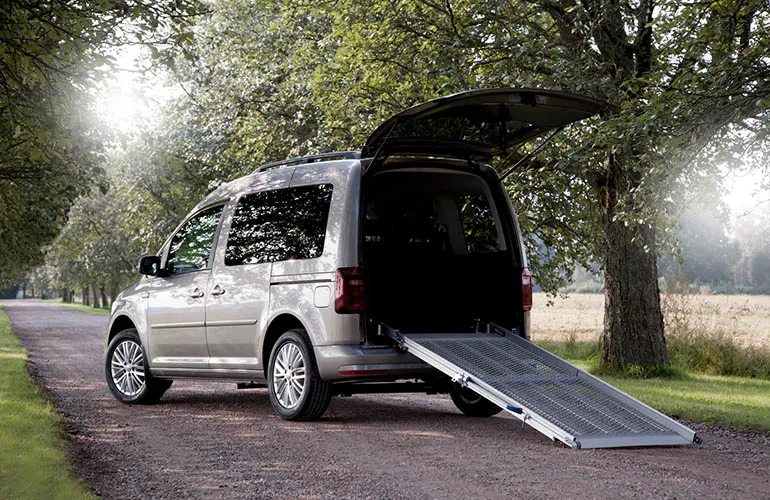
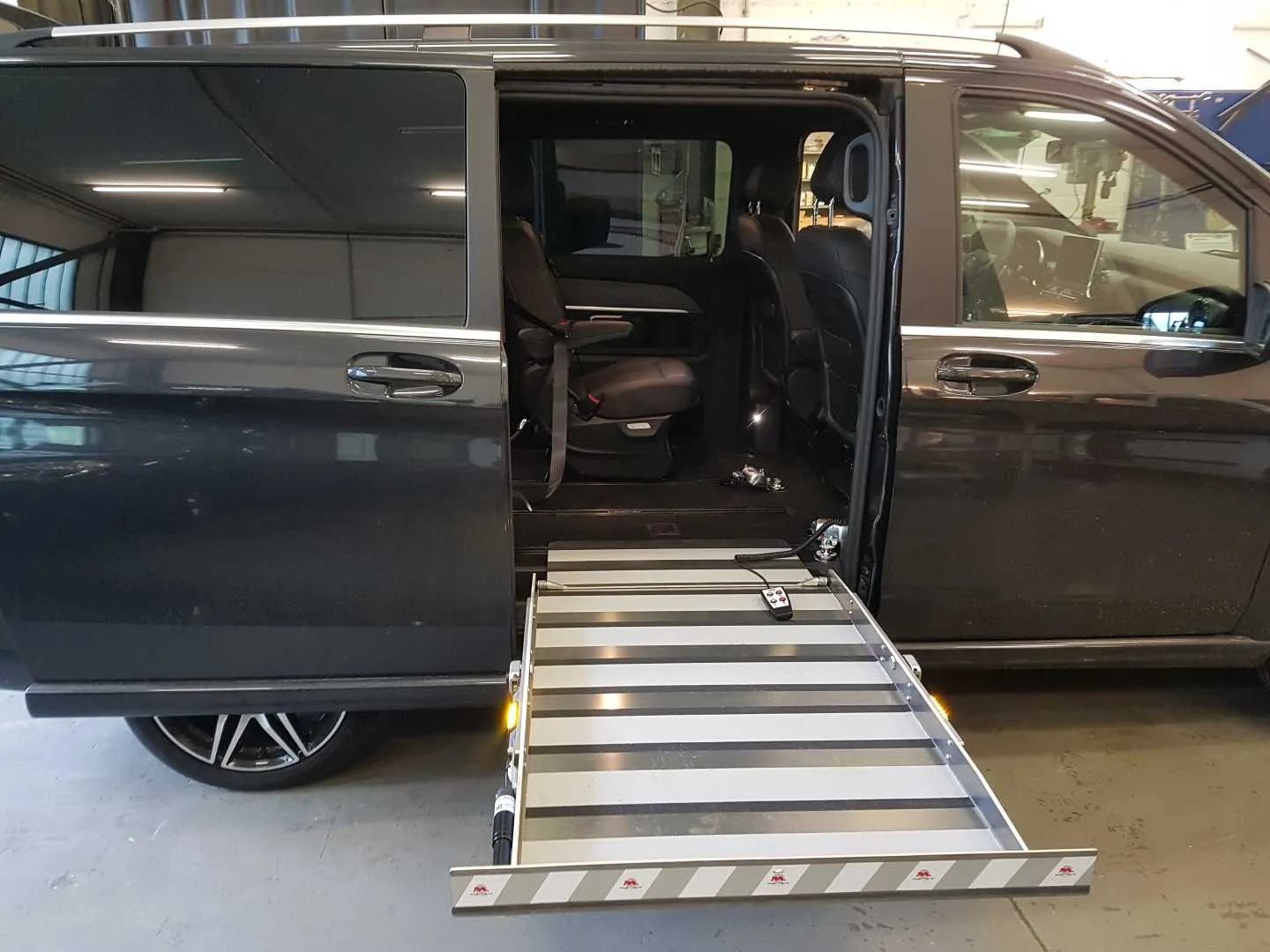
Maya One is for people who recognise that sentence — fleet managers, taxi operators, community transport — and want one securement area that already positions the hardware, guides the chair, and makes the passenger belt easier to get right. If you only need simple aluminium rails for a private WAV, start with vehicle securement systems instead. If the struggle is the ramp, see Maya Inqline.

01 · All-in-one platform

The hardware lives in the floor — not in a bag.

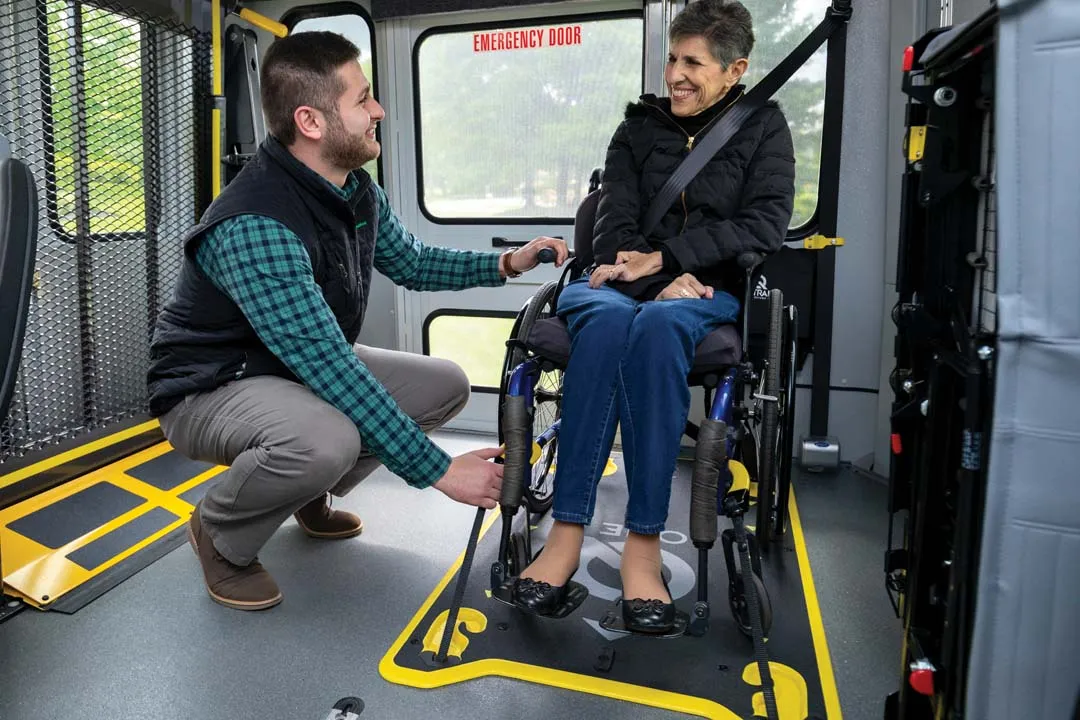
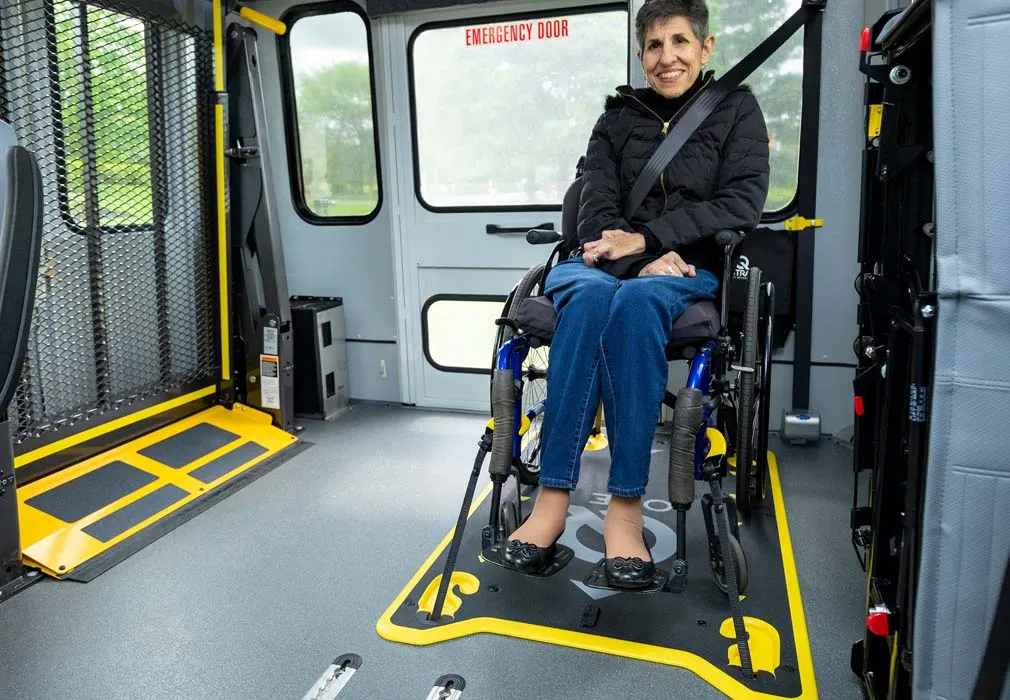
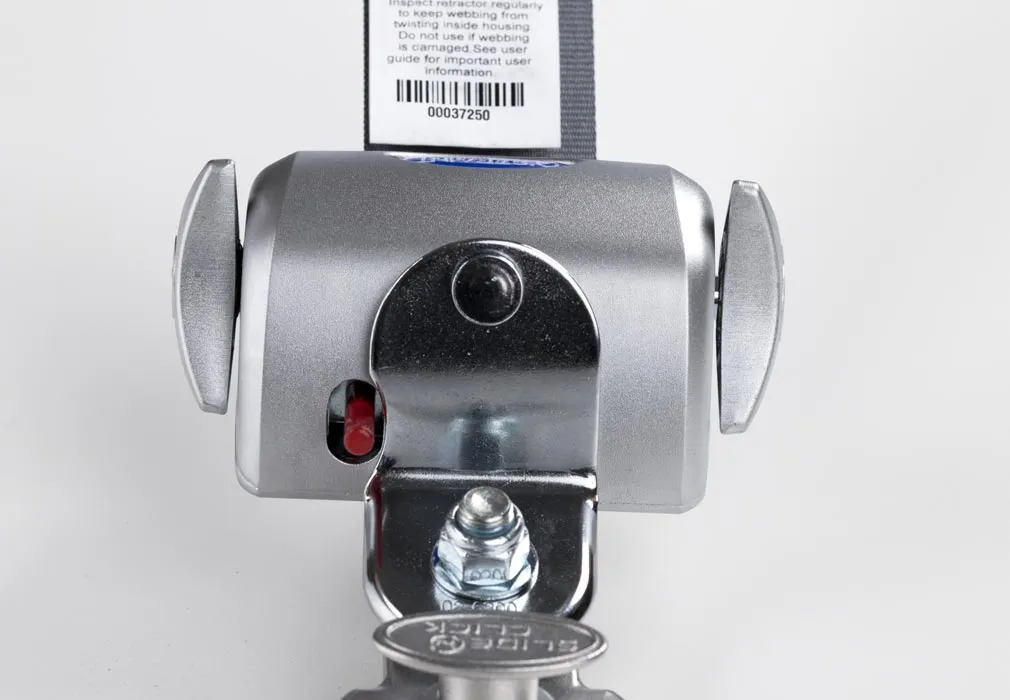
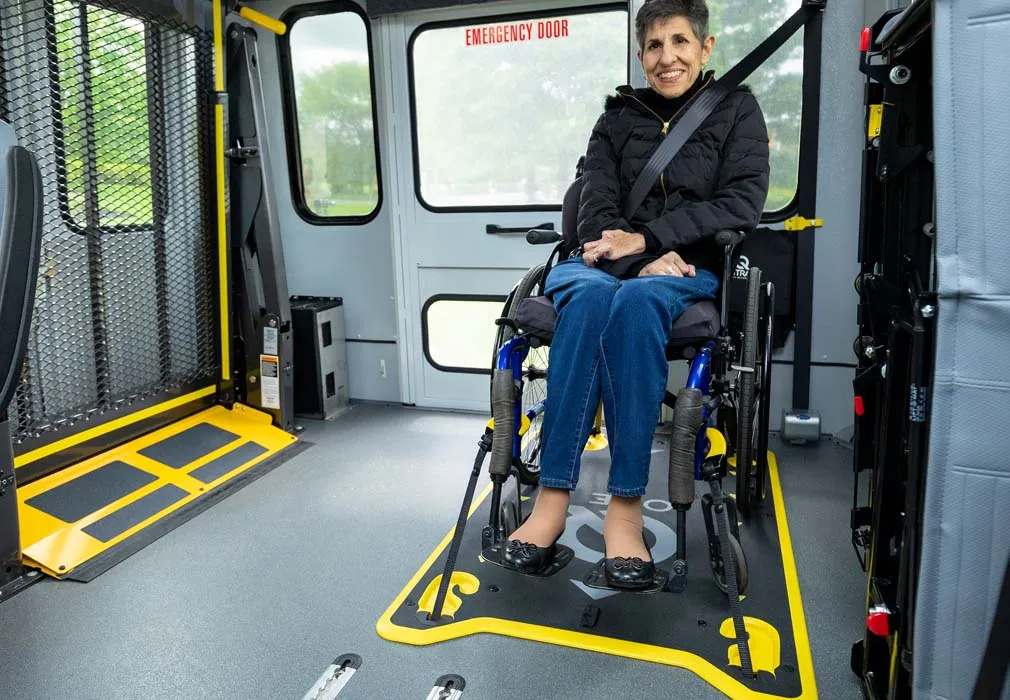
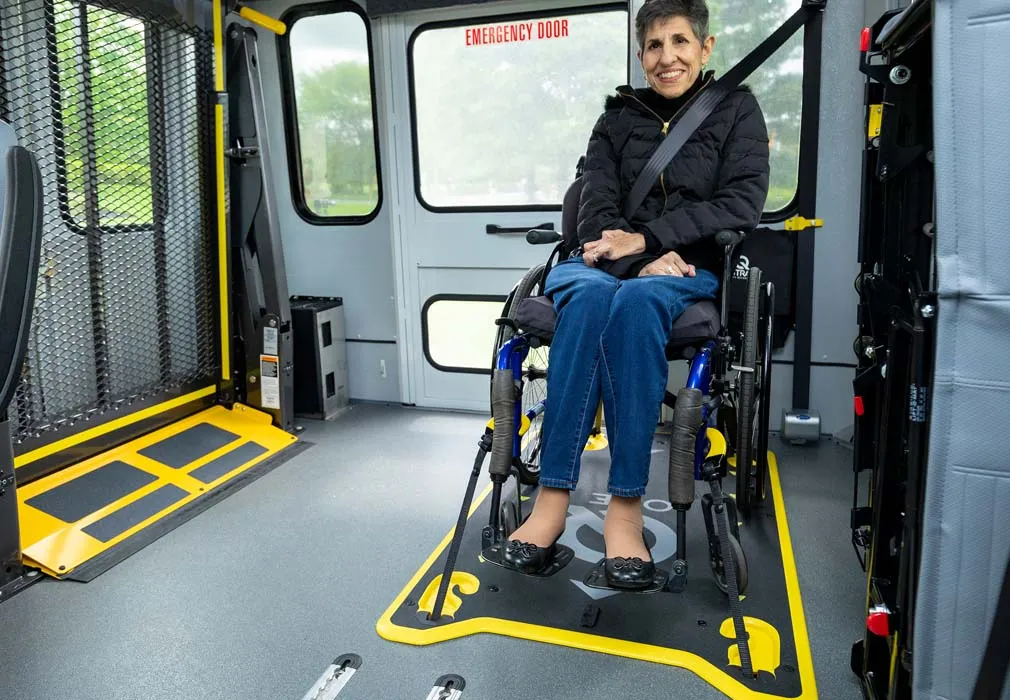
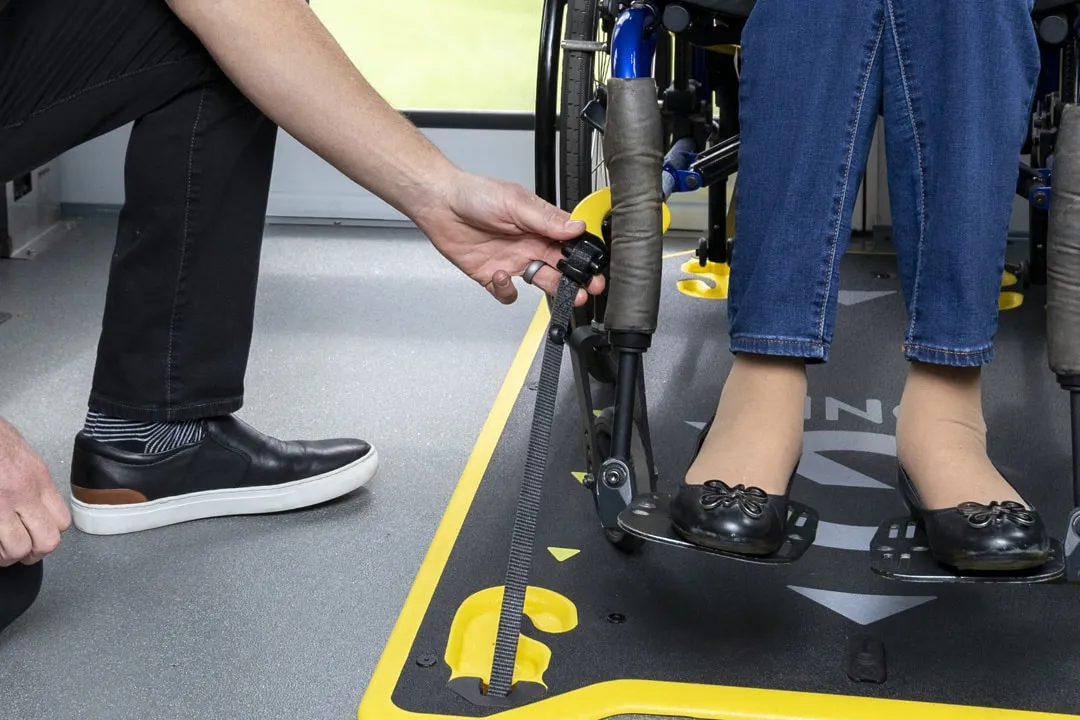
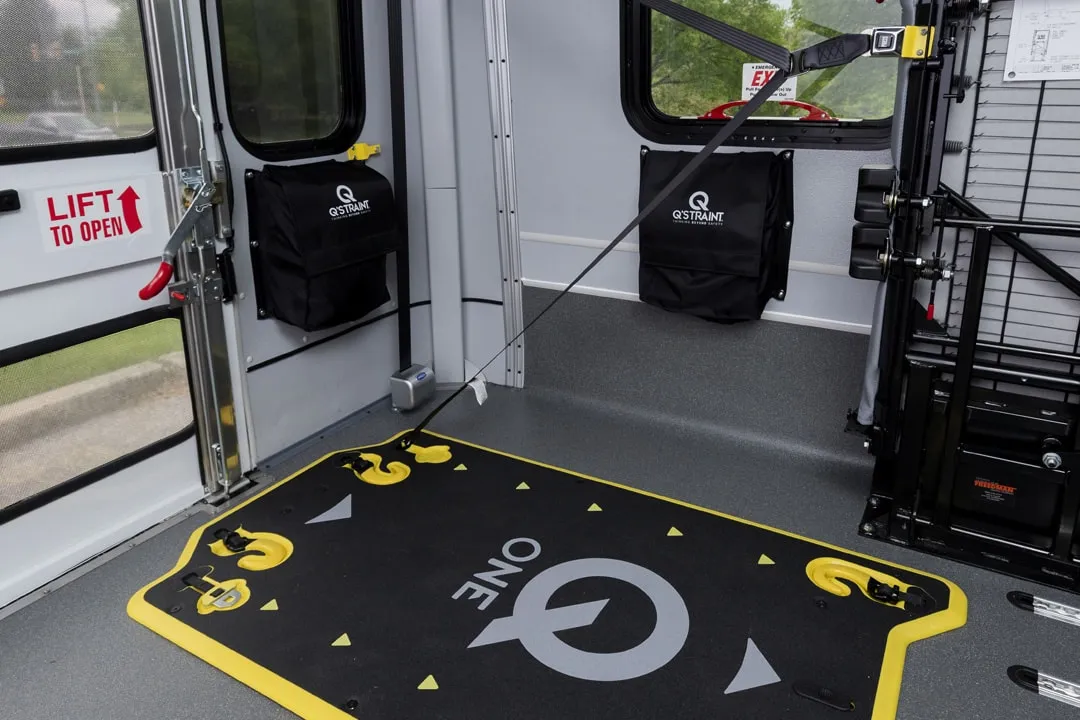
Retractors are integrated into the platform so operators are not hunting fittings, storing straps under seats, or leaving trip hazards when the space is empty. When the chair is not there, the securement area stays clear.
02 · Same footprint · more usable space

Large chairs need room — not retractor clutter.

Modern power wheelchairs eat the securement bay. An integrated platform keeps the usable “true” securement space larger than a traditional layout with bulky floor fittings, so ideal belt angles stay achievable.

03 · One process for every driver

Train once. Repeat every route.

Colour cues, fixed hook positions and a clear sequence turn securement into a checklist — not a memory test. That is what fleets buy: fewer improvisations, fewer near-misses, shorter dwell time at the kerb.

04 · Occupant belt that gets used

Chair first — person always.

Most incidents come from skipping or rushing the occupant restraint. Maya One keeps the passenger belt pre-positioned and reachable so drivers finish the job that actually protects the person in the chair.

Who recognises this

If one of these is you, Maya One is on the shortlist.

Paratransit / community transport
Taxi & ride fleets
Drivers slow or inconsistent on tie-downs
Oversized power chairs / scooters
Need one standard across many vans
Want less floor clutter when empty

Maya Mobility assesses vehicle type, how many wheelchair positions you need, and whether classic rails still make more sense for a private conversion. We specify, install and support — you get a path, not a parts list alone.

FAQ

Quick answers before you call.

No. Classic rails plus separate retractors are a modular kit — see vehicle securement systems. Maya One is an integrated platform that replaces that loose layout with a single securement station.
No. Wheelchair tie-downs hold the chair; a separate occupant restraint protects the person. Both are required for proper WTORS practice.
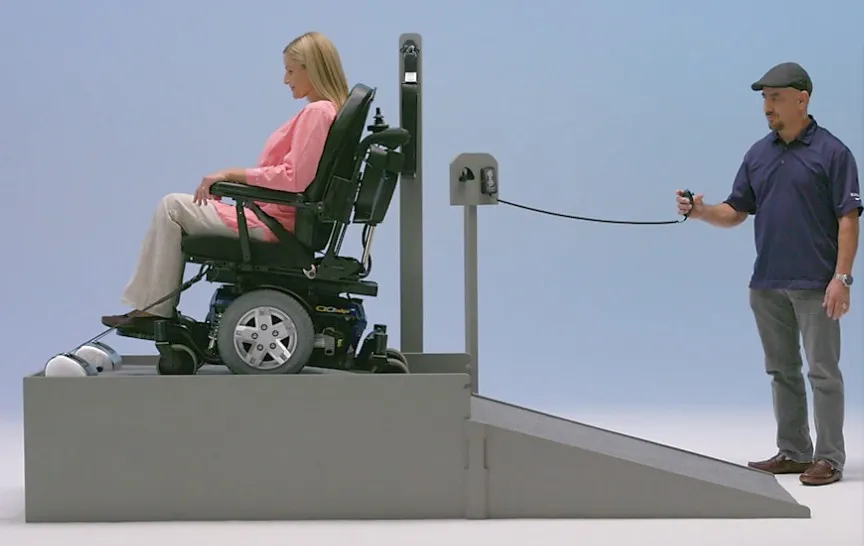
Possibly not as the first fix. Look at Maya Inqline for controlled boarding, then confirm securement once the chair is inside. Maya Mobility will map both if needed.
Often yes — depending on floor structure, floorplan and how many positions you need. Share vehicle make, model and photos; we confirm before quoting.

Tired of every driver inventing their own securement?

Tell us vehicle type, wheelchair mix and how many positions per van. A Maya Mobility specialist will confirm whether Maya One, INQLINE or classic rails fit — and what installation involves.

Write to us

Write to us